
In This Update: Investment Spotlight | Stock Market Review | Economic Review & Outlook
Chart of the Month | Closing Statements

INVESTMENT SPOTLIGHT
AI’s Reality Check
For much of the past two years, investors have viewed artificial intelligence as an almost limitless growth opportunity. October brought a healthy dose of reality. OpenAI’s annualized revenue reached approximately $50 billion, impressive by any measure but well below the $70 billion figure many investors had expected. The revelation fueled concerns that AI adoption may not be accelerating as quickly as previously assumed, triggering weakness across many AI-related stocks.
Investor skepticism intensified throughout earnings season. Despite strong results from companies such as Meta, Alphabet, and Amazon, market reactions were often muted or negative as investors focused less on current performance and more on rising capital expenditures. Meta fell sharply following earnings as concerns mounted over its growing AI spending commitments, while Alphabet declined after investors questioned whether AI could eventually pressure its highly profitable search business. Meanwhile, renewed demand for safe-haven assets pushed Treasury yields lower late in the month as investors reassessed the durability of the AI-driven growth narrative.
None of this suggests the AI spending theme is ending. In fact, companies continue to invest aggressively in AI infrastructure and applications. Rather, October highlighted a market that is becoming increasingly focused on the return on those investments. Investors appear willing to fund innovation, but they are becoming less willing to grant companies unlimited time and unlimited spending to prove their business models.
MARKET INDEX RETURNS | October 2026 | YTD 2026 |
S&P 500 Index | -0.9% | 10.7% |
Russell 2000 Index | 0.6% | 14.5% |
MSCI EAFE Index | -0.7% | 9.5% |
Bloomberg US Agg. Bond Index | 2.4% | -0.5% |
FTSE 3 Mo. T-Bill Index | 0.3% | 3.2% |
The U.S. Aggregate Bond ETF had its best monthly performance since July 2024.
STOCK MARKET REVIEW & OUTLOOK
Earnings Remain Strong, But Leadership Narrows
October was a challenging month for equities. The S&P 500 and Nasdaq both finished lower as investors rotated away from high-growth technology names and reassessed valuation levels in a higher interest rate environment. The Dow Jones Industrial Average was the lone bright spot among the major indexes, benefiting from its greater exposure to more defensive sectors and value-oriented companies.
Corporate fundamentals remained supportive. Earnings season produced another round of generally strong results, highlighted by impressive growth from companies such as Eli Lilly, whose continued success in obesity and diabetes treatments reinforced the market’s enthusiasm for healthcare innovation. At the same time, technology companies faced much greater scrutiny. Alphabet disappointed investors despite strong revenue growth, while broader technology selling accelerated after registering several all-time highs over the past quarters.
One encouraging development was the improvement in market breadth. While the S&P 500 and Nasdaq finished the month lower, the equal-weight S&P 500 outperformed its cap-weighted counterpart as weakness in several large technology companies offset gains elsewhere in the market. The shift suggests investors may be looking beyond a narrow group of mega-cap growth stocks and toward a broader range of sectors and companies. While leadership remains concentrated in certain areas, broader participation would represent a constructive development for the market heading into year-end.
S&P 500 SECTOR RETURNS | October 2026 | YTD 2026 |
Communication Services | -15.1% | -11.3% |
Consumer Discretionary | 3.9% | -2.1% |
Consumer Staples | 11.6% | 18.3% |
Energy | 14.0% | 59.9% |
Financials | 5.9% | 4.4% |
Healthcare | 9.9% | 21.0% |
Industrials | 0.3% | 8.9% |
Information Technology | -6.8% | 19.7% |
Materials | 6.6% | 16.0% |
Utilities | 10.2% | 3.9% |
Real Estate | 5.1% | 10.7% |
ECONOMIC REVIEW & OUTLOOK
Higher Rates Finally Begin to Bite
The economic backdrop remained resilient, but signs of strain became more apparent during October. Inflation accelerated to 3.7% year over year, driven largely by higher energy costs as oil prices moved above $100 per barrel amid ongoing U.S.-Iran tensions. Wholesale prices also surged, while inflation-related references in the Federal Reserve’s Beige Book reached record levels, underscoring how persistent price pressures remain across the economy.
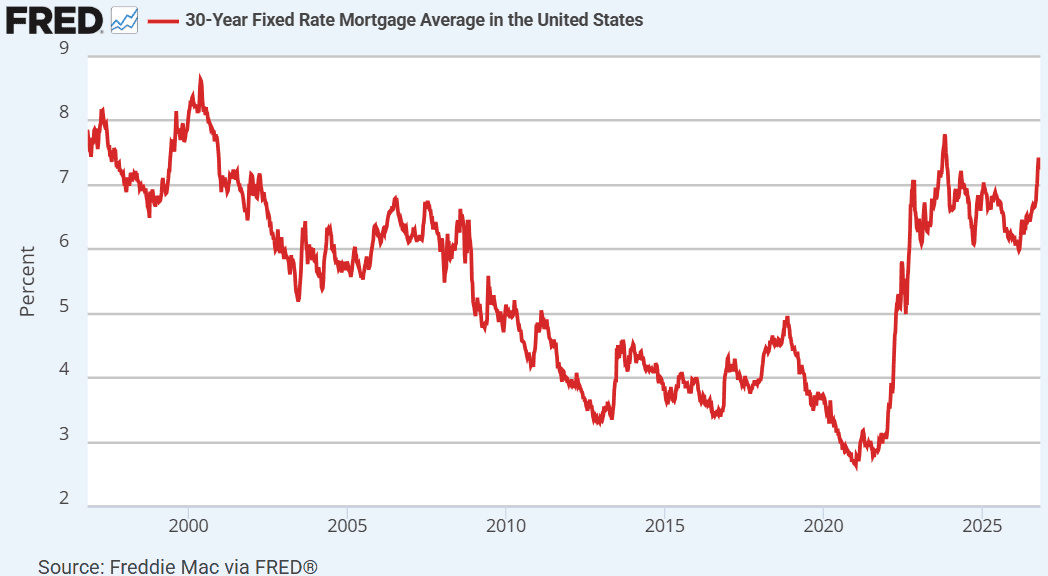
The Federal Reserve elected to leave interest rates unchanged during its October meeting, but policymakers continued to emphasize a cautious and data-dependent approach. Markets generally expect another rate increase before year-end, with an additional hike still priced into futures markets over the coming year. Meanwhile, Treasury yields remain near their highest levels since the early 2000s, reflecting ongoing concerns surrounding inflation, government borrowing needs, and the likelihood of higher rates for longer.
Consumers continue to demonstrate resilience, but there are signs that higher borrowing costs are beginning to erode purchasing power. While inflation-adjusted household income has increased modestly since the end of 2022, rising debt-service costs have offset much of that benefit for many families. Housing remains constrained by affordability challenges, although existing home sales managed a modest increase in September even as both prices and borrowing costs continued to rise. Taken together, the data suggests the economy remains stable, but the cumulative effects of higher rates are becoming increasingly difficult to ignore.
CHART OF THE MONTH
Mortgage Rates Rising Sharply After a Multi-Year Lull
Source: Federal Reserve Bank of St. Louis
CLOSING STATEMENT
Looking Ahead
October’s market action reflected a shift in investor priorities. For much of the year, markets were willing to look through valuation concerns in favor of anticipated earnings growth and technological innovation. More recently, investors have begun demanding clearer evidence that projected growth can justify the capital being deployed to achieve it. Whether discussing AI infrastructure, corporate acquisitions, or consumer borrowing, the cost of capital has become a more important consideration than it has been at any point in recent years.
As we move into November, attention will remain focused on inflation data, Federal Reserve policy, Treasury yields, and corporate earnings. The economy has thus far proven remarkably resilient despite elevated rates, but the margin for error appears smaller than it did earlier in the year. Markets are unlikely to abandon the themes that have fueled gains in recent years, particularly artificial intelligence, but October demonstrated that investors are becoming more selective. Going forward, success may depend less on simply identifying areas of growth and more on identifying companies capable of translating that growth into sustainable profits.
Please reach out to one of your Account Officers or any member of our Executive Leadership Team to discuss topics raised in this letter or if we can assist you in any other way.
Meet The Plimoth Investment Advisors Executive Leadership Team

Steven A. Russo, CFA
Chairman of the Board
508‑591‑6202
srusso@pliadv.com

Mark J. Gendreau, CFP ®
President & CEO
508-591-6211
mgendreau@pliadv.com

Edward J. Misiolek
Senior Vice President & Operations Officer
508‑675‑4316
emisiolek@pliadv.com

Teresa A. Prue, CFP®
Senior Vice President &
Head of Fiduciary Services and Administration
508‑591‑6221
tprue@pliadv.com
